Sema Image
How does outdoor temperature affect search and rescue thermal scans? It is a practical question with serious field consequences. Thermal cameras do not see people directly. They detect differences between body heat, clothing, ground, vegetation, and surrounding air. When temperatures change, those differences can become stronger, weaker, or confusing.
Dr. Gerald C. Holst, author of Electro-Optical Imaging System Performance, offers a useful principle: “The environment is part of the imaging system.” That idea matters during every rescue deployment. On a cold night, a warm person may stand out against frost-covered grass. After sunrise, sunlit rocks can retain heat and resemble human signatures. Wet clothing may also reduce contrast, even when the subject remains alive and responsive. Wind creates another problem. It cools exposed skin and shifts heat across the scene.
The ground remembers the day.
This introduction will examine seven practical ways outdoor temperature changes thermal scans. It will consider air temperature, surface temperature, humidity, wind, solar heating, clothing, and equipment calibration. Field teams should compare thermal imagery with maps, sound, footprints, witness information, and visual checks. A bright shape is not automatically a person. A weak signature is not proof that nobody is present.
Some assumptions fail.
Operators may also overlook battery performance, lens fogging, or delayed body cooling after exposure. These details are easy to dismiss under pressure. They should not be. Reliable search work requires repeated observation, documented conditions, and honest review of uncertain images. No thermal scan is perfect, but disciplined interpretation can make difficult decisions safer and more defensible.
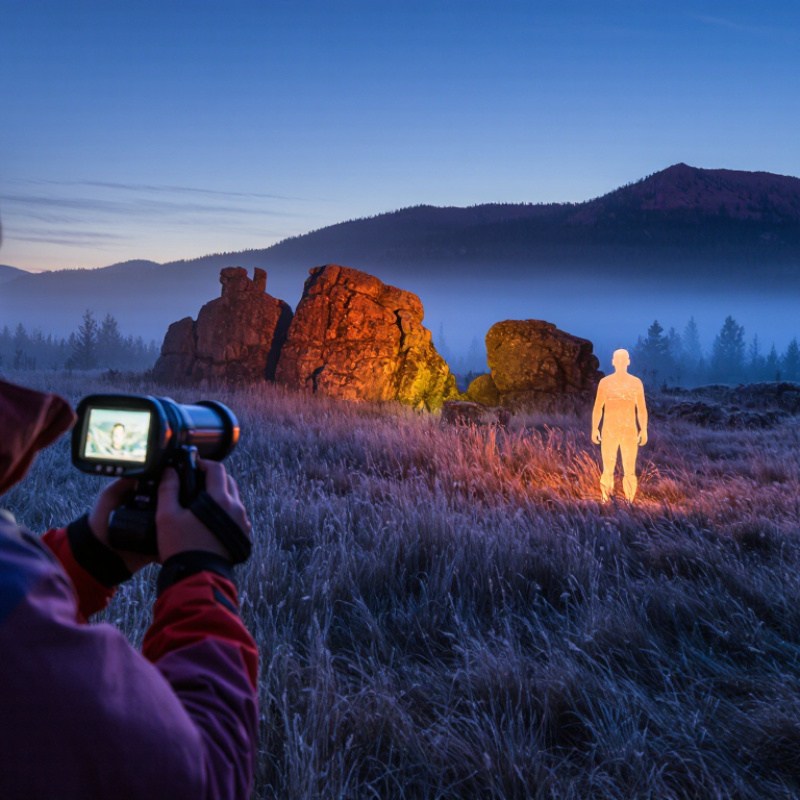
Human skin commonly measures 32–35°C, not the body’s internal temperature. This range is a practical starting point for rescue thermal scans. It is not a fixed rule. Age, circulation, clothing, moisture, and recent activity can shift the reading.
Cold air quickly cools exposed skin, especially the face, hands, and ears. Wind makes this effect stronger. A person standing beside a frozen vehicle may appear cooler than expected. Wet clothing can create dark, misleading areas on the thermal image. I have seen rescuers focus on bright spots without checking the surrounding conditions. That mistake is easy to repeat.
Warm environments create different problems. Direct sunlight may heat a helmet, roof, or rock near the subject. A recently used engine can also produce false heat sources. Scan from several angles, and allow the device to stabilize outside sheltered vehicles. Keep the sensor lens clean, and follow its calibration guidance. Compare both sides of the body when possible. A trained responder should confirm concerning findings with physical assessment and approved medical equipment.
Record the air temperature, wind, shade, and distance. Small details matter. Thermal scans support decisions, but they do not replace clinical judgment. The baseline may be useful, yet it deserves questioning at every scene.
7 Tips How Outdoor Temperature Affects Rescue Thermal Scans
Outdoor temperature can change how clearly a thermal camera separates a person from the background. For rescue work, choose a high-sensitivity camera with a NETD rating of 50 mK or lower. Lower NETD values reveal smaller temperature differences, such as a warm hand against cool vegetation. Tip 1: Check the NETD specification, not only the image resolution. Tip 2: Confirm that the rating applies across the intended operating range. Some specifications use ideal laboratory conditions.
Tip 3: Scan early when ground temperatures differ from body temperatures. Tip 4: Recheck targets after rain, wind, or direct sunlight. Wet clothing may cool quickly, while rocks can retain heat. Tip 5: Adjust the thermal range manually when possible. Automatic settings may hide a faint signal beside a hot vehicle or sunlit wall. Keep the image practical.
Tip 6: Use a tripod or steady grip during long scans. Small movements can blur distant details, even with sensitive sensors. Tip 7: Compare thermal findings with visible-light views and known landmarks. A warm shape is not always a person. I have seen reflective metal create convincing false signals, especially near water. That mistake is easy to make. Operators should record distance, weather, surface conditions, and camera settings during each scan. These notes support later review and expose weak assumptions. A sensitive sensor helps, but careful technique still decides whether the image is useful.
Tip 1 Set emissivity close to 0.98 when scanning exposed human skin. This value reflects how efficiently skin emits infrared energy. It is not a universal constant. Moisture, clothing, dirt, and surface condition can change the reading.
Tip 2 Outdoor temperature can distort thermal scans. Cold air may cool the skin surface, while direct sunlight can create warmer patches. Wind makes exposed areas lose heat quickly. Check the face, neck, and hands separately. Compare both sides of the body. A single bright spot should not decide your assessment.
Tip 3 Avoid reflective backgrounds, such as vehicle windows or polished metal. They may mirror surrounding heat instead of showing the person clearly. Move a few steps when possible. Let the scanner adjust outdoors before recording images. Small errors matter.
In field practice, I have seen wet skin appear cooler than expected after rain. Thick clothing can also hide a warm body beneath a cold outer layer. Scan uncovered areas and note the person’s recent environment. Was the subject standing in shade, exercising, or near a heated surface? Record those details beside the image. I sometimes expect cleaner readings than conditions allow. That assumption needs review. A thermal scan supports trained judgment, but it should not replace direct observation or appropriate medical evaluation.
Rain, wind, and fog can make a rescue thermal scan look more certain than it is. Water cools surfaces and creates scattered reflections. Wind rapidly removes heat from exposed clothing, rocks, and vegetation. Fog adds a soft, uneven layer that weakens distant thermal signatures.
Recheck in poor weather. Move to a sheltered position when possible, then scan the same area again. Compare heat patterns, not isolated bright spots. A warm rock may resemble a person after sunset. Wet branches can also produce confusing edges.
Keep the scanner lens clear, and wipe away droplets with a suitable clean cloth. Small details matter.
Use visible-light observations alongside thermal readings. Look for footprints, movement, clothing color, or disturbed grass. Ask another trained operator to review uncertain images. I have learned that our first interpretation is sometimes wrong. That is uncomfortable, but useful. Record the time, weather, distance, and viewing angle for every scan. Fog may lift, and wind may shift, so conditions can change within minutes. Recheck areas near trees, ditches, and walls after the weather changes. A missing person may be partly sheltered, leaving only a small heat signature. Never treat one unclear image as confirmation. Encourage steady communication and follow established rescue procedures.
7 Tips How Outdoor Temperature Affects Rescue Thermal Scans
Confirm camera accuracy before deployment. Many systems specify ±2°C or ±2% error, but these terms need careful reading. At a 30°C target, ±2°C allows readings between 28°C and 32°C. The percentage may refer to the reading, full scale, or calibrated range. Ask for the exact test conditions. Many datasheets use controlled environments near 23°C, not freezing rain or desert heat.
Outdoor conditions can widen uncertainty. ISO 18434-1 identifies ambient temperature, emissivity, reflected radiation, and atmospheric conditions as important thermography limitations. ASTM E1933 also treats emissivity and reflected temperature as major measurement factors. Wet clothing, shiny metal, glass, snow, and shaded ground can distort a person’s thermal signature. A warm vehicle may appear brighter than a nearby survivor. Contrast helps detection, but it does not guarantee temperature accuracy.
Allow the camera to stabilize before scanning. Check a known reference surface when practical, then repeat the check after moving from a vehicle into cold air. Keep lenses clear of condensation. Batteries also lose performance in low temperatures. A useful field log should record air temperature, wind, rain, scan distance, and displayed readings. That discipline matters. I have seen teams trust a sharp image too quickly. A clear thermal picture can still be quantitatively wrong. Follow the stated ±2°C or ±2% limit, and treat borderline readings as uncertain rather than exact. Sources: ISO 18434-1:2008; ASTM E1933; U.S. Department of Energy, Infrared Thermography Guide.
Rain cools surfaces and creates scattered reflections. Wind removes heat from clothing, rocks, and vegetation. Fog weakens distant heat patterns. Conditions change quickly.
A single bright spot may be a warm rock or wet branch. Move to shelter when possible. Scan the same area again and compare patterns. One image is not confirmation.
Check footprints, movement, clothing color, and disturbed grass. These details can support or challenge the thermal image. Thermal contrast alone is not enough.
A stated limit of ±2°C may allow a 30°C target to appear between 28°C and 32°C. A percentage limit may use different reference ranges. Ask about the exact test conditions.
Outdoor readings change with air temperature, wind, rain, distance, and reflected heat. Wet clothing, glass, metal, snow, and shaded ground can distort results. The displayed image may look precise but remain quantitatively wrong.
Let the camera stabilize before use. Check a known reference surface when practical. Wipe droplets and condensation from the lens with a clean cloth. Cold weather can also reduce battery performance.
Record the time, air temperature, wind, rain, distance, viewing angle, and displayed reading. Note changing fog or shelter conditions. These details make later comparisons more useful.
Ask for a second review when heat patterns are weak, distant, or partly blocked. Recheck areas near trees, ditches, and walls. I have trusted sharp images too quickly before. That mistake deserves attention.
How does outdoor temperature affect search and rescue thermal scans? It can significantly change the contrast between a person and the surrounding environment, making proper preparation essential. Human skin typically measures between 32°C and 35°C, so operators should establish this thermal baseline before interpreting images. High-sensitivity cameras with a NETD rating of 50 mK or lower can help detect subtle temperature differences, especially when the subject is partially hidden or far away. Camera settings should also account for skin emissivity, which is approximately 0.98, to support more reliable readings.
Weather conditions must be considered throughout the search. Rain, wind, and fog can cool surfaces, obscure heat signatures, and reduce thermal contrast, so scans should be repeated when visibility or conditions change. Finally, operators should understand the camera’s accuracy limits, since many systems may specify an error of approximately ±2°C or ±2%. Thermal images should therefore support, rather than replace, careful scene assessment and confirmation.
