Sema Image
Night driving becomes uncertain when headlights meet fog, rain, dust, or an unlit roadside. A person may appear only briefly beyond the headlight beam. A thermal camera detects heat rather than visible light, helping drivers notice pedestrians, cyclists, animals, and stalled vehicles earlier. That difference can create valuable reaction time.
This guide examines China’s top thermal camera options for automotive night safety. It considers sensor resolution, thermal sensitivity, detection distance, refresh rate, lens coverage, display clarity, and resistance to vibration and weather. It also reviews installation methods, calibration needs, image stability, and compatibility with advanced driver assistance systems. These details matter inside a moving vehicle. A sharp image is useful only when the driver can understand it quickly.
The central question is practical: How to use thermal cameras to improve automotive safety at night. A reliable system should support attention, not replace it. Drivers still need clean windshields, suitable speed, proper lighting, and careful judgment. Thermal imaging can struggle with glass, reflective surfaces, heavy rain, and objects near ambient temperature. That limitation deserves honest attention. Some product specifications look impressive on paper, yet real roads can expose weaknesses. Testing should include dark rural lanes, wet highways, urban edges, and sudden pedestrian movement. This overview aims to help vehicle manufacturers, fleet operators, and safety professionals compare solutions with evidence rather than marketing language. The best choice may not be the most expensive camera. It should be dependable, clearly displayed, properly installed, and supported by responsive technical service.
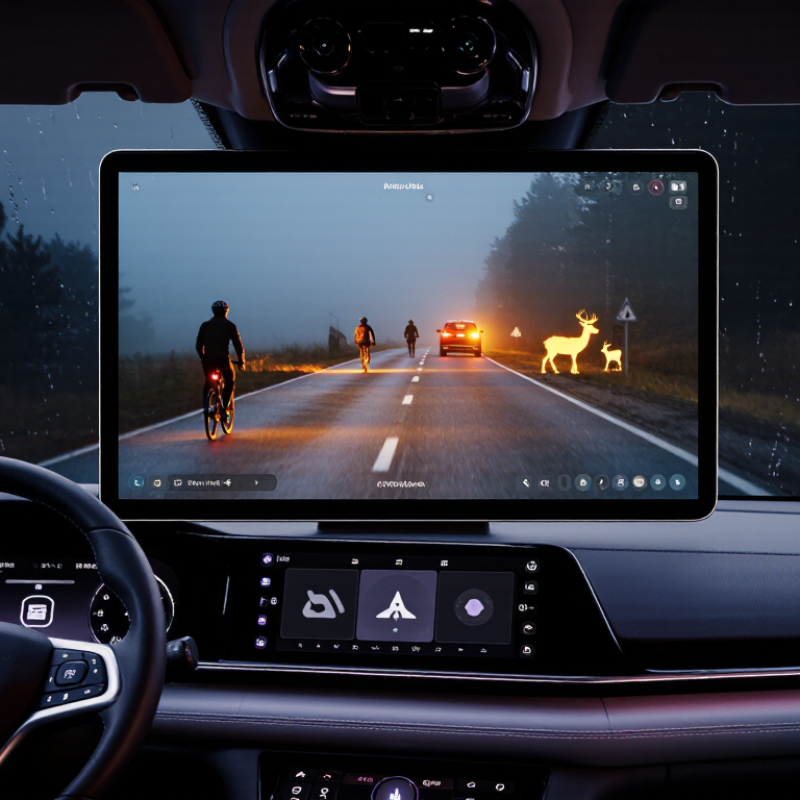
Thermal cameras detect infrared energy instead of visible light. Every warm object emits heat, including people, animals, vehicles, and engines. A thermal sensor converts these heat differences into a visible image. It does not need headlights or street lighting.
For automotive night safety, this capability can reveal hazards beyond the reach of normal headlights. A pedestrian may appear as a bright shape beside a dark roadside. An overheated tire or brake component may also show an unusual temperature pattern. Driver-assistance systems can use this information to support warnings, especially on unlit roads. Thermal cameras can help.
However, thermal imaging is not magic. Heavy rain, dense fog, dirty lenses, and hot road surfaces can reduce contrast. Most systems cannot see through ordinary vehicle glass, so sensor placement matters. Installation should provide a clear forward view and stable calibration. In practical testing, drivers should compare thermal alerts with headlights, radar, and direct observation.
A false warning can distract a driver. A missed object can create dangerous confidence. Therefore, reliable systems need careful software tuning, regular cleaning, and clear display design. Testing should include pedestrians in dark clothing, cyclists, parked vehicles, and roadside animals. Some results may look impressive in a demonstration but weaker on real roads. That limitation deserves honest attention.
China Top Thermal Cameras for Automotive Night Safety?
Automotive thermal cameras detect heat instead of relying on visible light. A pedestrian appears as a warm shape against a cooler road. The system can identify people beyond headlight range, even during darkness or partial glare. It tracks body movement, direction, and distance through image-processing software. That extra time can support safer braking decisions.
Animals create different challenges. A deer may appear suddenly beside a forest road, while a small dog can blend into roadside shadows. Thermal imaging highlights these temperature differences. It can also reveal road hazards, including overheated vehicle parts, fallen objects, and damaged areas with unusual heat patterns. Clear contrast matters. Wet surfaces, heavy rain, and warm backgrounds can reduce detection accuracy.
Reliable automotive use requires careful calibration and regular sensor checks. Engineers should test performance on real roads, not only controlled tracks. A camera may detect a person but misjudge their path. That limitation deserves attention. Drivers still need visual confirmation and proper judgment. Thermal imaging is helpful, not magic. It works best when combined with radar, visible cameras, vehicle speed data, and warning systems. Small animals remain difficult to classify. False alerts can also distract drivers, especially in busy urban traffic. Continuous software testing and transparent performance reporting make these systems more trustworthy.
Representative long-wave infrared surface-temperature readings commonly encountered in nighttime driving scenarios
Thermal cameras detect infrared radiation and display temperature differences rather than visible color. Warm human and animal bodies usually create strong contrast against cooler surroundings, while road hazards such as overheated tires, engines, or recently used brakes can also appear as localized heat signatures. Actual readings vary with weather, distance, surface material, wind, and camera calibration.
China Top Thermal Cameras for Automotive Night Safety?
Key Features of China’s Leading Automotive Thermal Camera Systems
Leading automotive thermal camera systems combine long-wave infrared sensors with visible-light cameras. This combination helps drivers detect pedestrians, animals, and stalled vehicles in darkness. High resolution improves shape recognition, while low thermal sensitivity reveals small temperature differences. Low latency matters too. A delayed warning can reduce its value during a sudden roadside event. Rugged housings, stable calibration, and sealed connectors support performance through dust, rain, vibration, and temperature changes. Engineers should also check diagnostic functions and documented testing against relevant automotive quality and safety processes.
Tips: Compare real night footage, not only specification sheets. Test detection distances on roads with uneven lighting. Ask for calibration records and failure-rate data. Check whether alerts remain clear after windshield installation. A system may perform differently in a laboratory.
Thermal imaging is powerful, but it is not perfect. It cannot reliably display road signs, lane markings, or familiar colors. Heavy rain, dense fog, and hot road surfaces may reduce contrast. False alerts can also appear near exhaust pipes or sun-warmed barriers. For this reason, reliable designs use sensor fusion, adjustable warning zones, and clear human-machine interfaces. In field evaluations, I would record misses as carefully as successful detections. That uncomfortable detail often exposes weaknesses hidden by polished demonstrations.
China’s thermal-camera market is drawing attention as automakers improve night safety. Image quality should be measured beyond resolution. A 640×512 sensor can reveal a pedestrian’s body outline, but lens quality and thermal sensitivity decide whether details remain visible. A lower NETD value, such as 40–50 mK, usually preserves weaker heat differences. Test footage should include unlit roads, wet pavement, bicycles, and dark clothing. Night scenes are rarely clean.
Detection range needs a defined target and measurement method. A human-sized target may appear at 150–300 meters, but recognition usually occurs closer. The NHTSA Traffic Safety Facts 2022 recorded 7,522 pedestrian deaths in the United States. That figure supports earlier warnings, not inflated distance claims. Compare detection, recognition, and classification separately. Ask whether the camera detects a warm shape or identifies a pedestrian correctly. These are different results.
Vehicle integration is equally important. The camera should provide stable video, low latency, accurate timestamps, and reliable diagnostics. It must cooperate with braking, lighting, and driver-alert systems without distracting warnings. Euro NCAP’s 2025 protocols place greater attention on vulnerable-road-user protection and nighttime performance. Integration testing should examine CAN communication, windshield placement, vibration, rain, and sensor heating. Some specifications look impressive on paper. Real roads remain less predictable. A useful review should publish missed detections, false alarms, and calibration conditions. That transparency is still incomplete across the industry.
Automotive thermal cameras should support, not replace, headlights, radar, and driver attention. In China, developers must check applicable vehicle regulations and type-approval requirements. Functional safety work commonly references ISO 26262. Safety-of-intended-functionality reviews are also important under ISO 21448 principles. Cybersecurity and software-update controls may apply in connected vehicles. Requirements vary by vehicle class and export market.
Installation changes real performance. A grille-mounted camera can provide a clear forward view, but road debris may damage its protective window. Windshield installation reduces exposure to stones, yet heating elements and reflections can affect image quality. Roof or mirror mounting offers a wider angle, but vibration and water sealing require careful engineering. Calibration should follow every bumper repair or sensor replacement. Small alignment errors matter. Clean the lens before testing. Night tests should include pedestrians, cyclists, animals, fog, and wet roads.
Future systems will combine thermal images with visible cameras, radar, maps, and vehicle data. Edge processing may reduce response time. Artificial intelligence can improve object classification, though false alerts remain a practical concern. I would not treat a promising algorithm as proven safety evidence. Developers need repeatable tests, failure records, cybersecurity monitoring, and clear human-machine alerts. Thermal sensing may also support predictive maintenance and low-visibility driving assistance. However, heat signatures change with weather, tire spray, and background temperature. Engineering teams should keep reviewing these limitations.
They detect body heat rather than visible light. A pedestrian appears as a warm shape against a cooler road. Detection may extend beyond headlight range. The camera can estimate movement, direction, and distance. It still may misunderstand a person’s path.
Yes, thermal contrast can reveal deer, dogs, and other animals near roadside shadows. A deer may appear beside a forest road without warning. Small animals remain difficult to classify. Do not trust every alert.
It may reveal fallen objects, overheated vehicle parts, and damaged areas with unusual heat patterns. Wet roads and warm backgrounds can reduce contrast. Some hazards show little thermal difference.
Heavy rain, dense fog, wet surfaces, and hot pavement may weaken detection accuracy. Exhaust pipes and sun-warmed barriers can create false alerts. Performance changes with the weather.
Thermal imaging shows heat, while visible cameras provide colors, signs, and lane details. Radar helps estimate distance and movement. Combining sensors can reduce individual weaknesses. No single sensor is perfect.
Common locations include the grille, windshield area, roof, or side mirror. A grille mount offers a clear view but faces road debris. Windshield mounting reduces stone impact but may suffer from reflections. Installation choices involve trade-offs.
Engineers should inspect calibration, connectors, housing seals, and diagnostic functions regularly. Clean the lens before night testing. Recalibration is needed after bumper repairs or sensor replacement. Small alignment errors matter.
Compare real night footage, not only specification sheets. Test pedestrians, cyclists, animals, fog, wet roads, and uneven lighting. Request calibration records and failure-rate data. Record missed detections too. Polished demonstrations can hide weaknesses.
Thermal cameras can significantly improve automotive night safety by detecting heat rather than relying only on visible light. This allows them to identify pedestrians, cyclists, animals, stopped vehicles, debris, and other road hazards in darkness, fog, glare, or light rain. The keyword How to use thermal cameras to improve automotive safety at night focuses on combining thermal images with driver alerts, night-vision displays, and advanced vehicle safety systems to provide earlier warnings and support better decisions.
China’s leading automotive thermal camera systems are evaluated by image clarity, temperature sensitivity, detection range, refresh rate, durability, and compatibility with vehicle electronics. Effective solutions should integrate smoothly with dashboards, warning systems, or driver-assistance functions while meeting appropriate safety and quality requirements. Installation may include factory integration, grille-mounted units, or carefully positioned aftermarket systems. Future developments are expected to bring smaller sensors, improved image processing, wider detection coverage, and more reliable performance, helping drivers recognize hidden hazards earlier without replacing attentive driving.
