| Thermal detection |
Most firefighter thermal imagers use uncooled LWIR sensors, commonly operating in approximately the 7–14 μm wavelength region. |
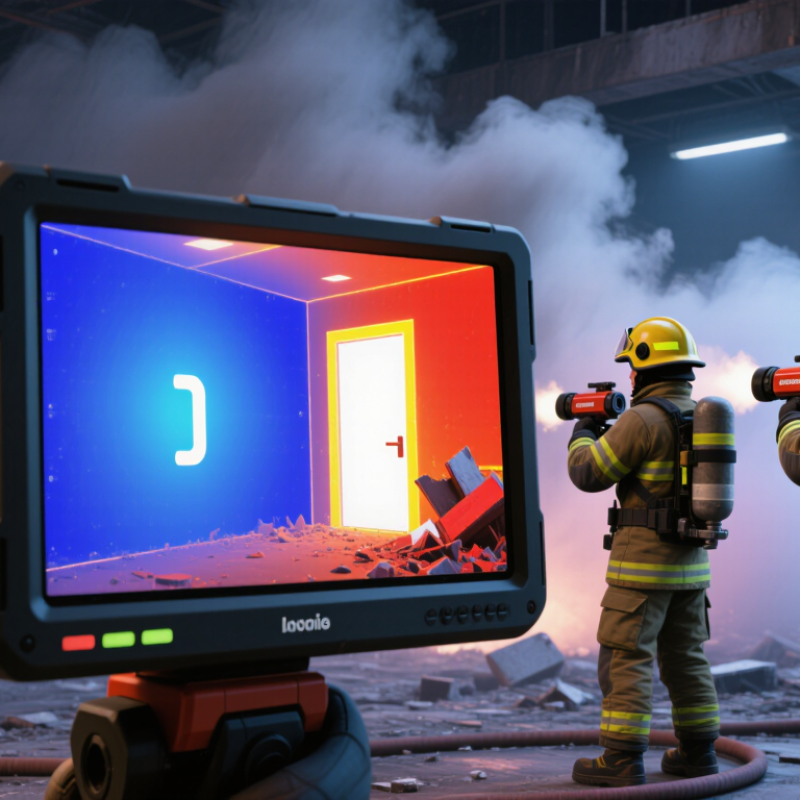
The camera can show heat patterns through smoke and in low-visibility conditions, helping crews orient themselves and locate hot areas. |
Confirm the intended firefighting use and test the image in realistic smoke, heat, and lighting conditions. It does not provide ordinary visible-light vision. |
| Thermal resolution |
Fire-service models range from lower-resolution arrays, such as 160 × 120 pixels, to higher-resolution options such as 320 × 240 or 640 × 480 pixels. |
More pixels can make distant objects and smaller heat patterns easier to distinguish, but resolution alone does not determine field performance. |
Compare image clarity at expected working distances, including when wearing gloves and viewing through the camera’s display. |
| Thermal sensitivity |
A specification of 50 mK or lower is common in many thermal-camera classes; actual sensitivity varies by sensor, settings, and operating conditions. |
Higher sensitivity can help reveal subtle temperature differences, such as heat patterns around doors or walls. |
Treat sensitivity as one comparison factor, not a substitute for hands-on evaluation or clear operating procedures. |
| Temperature measurement |
Displayed temperature ranges and measurement accuracy are model-specific. Emissivity, distance, reflections, smoke, and viewing angle can affect readings. |
Temperature readings can support assessment of hot spots and changing conditions, but should not be treated as exact measurements of every surface. |
Review the stated measurement range, accuracy conditions, and limitations. Use established incident procedures when interpreting readings. |
| Refresh rate and image response |
Many handheld thermal imagers provide a live image at approximately 30 Hz or higher, depending on the device and settings. |
A responsive image is easier to interpret while moving, scanning a room, or coordinating with a team. |
Check for image lag, freezing, or display difficulty during movement and under low-light conditions. |
| Ruggedness and environmental protection |
Impact resistance, water resistance, operating-temperature limits, and ingress-protection ratings differ across models. No single rating describes every hazard of firefighting. |
Fireground equipment may be exposed to impacts, water, dust, and rapid temperature changes. |
Verify tested limits and applicable fire-service requirements, including the current edition of NFPA 1801 where relevant. Follow inspection and care instructions. |
| Battery and controls |
Runtime varies with battery capacity, display brightness, operating temperature, and features in use. Many devices use rechargeable or replaceable batteries. |
A camera is only useful when charged, accessible, and simple to operate in protective gloves. |
Check runtime claims and charging arrangements, and establish routines for battery checks, spare batteries, and pre-shift readiness. |
| Search and rescue |
Sweep methodically from a known position, scan likely locations, and recheck uncertain thermal patterns. A person’s temperature may not contrast clearly with the background. |
The image can help direct a search, but thermal contrast is not a reliable guarantee that a person will be visible. |
Use the camera as one aid within trained search procedures; maintain orientation, team communication, and other required life-safety practices. |
| Fire and hot-spot assessment |
Scan ceilings, walls, doorways, and concealed spaces for unusual heat patterns; compare areas and repeat scans as conditions change. |
Thermal patterns can help crews identify areas for closer assessment and monitor changes during overhaul. |
Do not infer structural safety, fire location, or conditions behind a surface from the image alone. Confirm findings using approved tactics and tools. |
| Training and maintenance |
Regular hands-on practice, pre-use checks, cleaning, battery care, and manufacturer-directed inspection help keep equipment ready. |
Users need to recognize image modes, temperature indicators, limitations, and signs of malfunction under operational pressure. |
Include camera operation in department training and follow the device instructions and local inspection schedule. |
 Sema Image